Approaching Climax
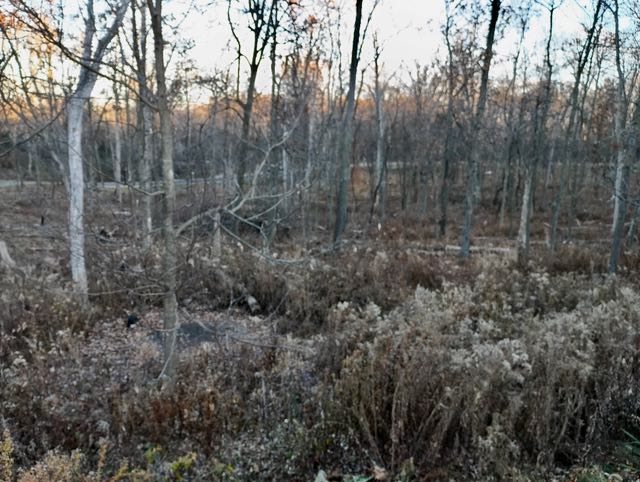
Last fall saw completion of the first phase of restoration at the Squirrel Farm. For four years we removed of invasive shrubs and controlled of garlic mustard. Last year, an NRCS EQIP grant funded woodland thinning for timber stand improvement. This year we reduced slash from last year’s thinning. EQIP funds paid for purchase of a backpack leaf blower to assist with clearing fire breaks on the Squirrel Farm and we also used it to help neighbors burn.
A Little Background
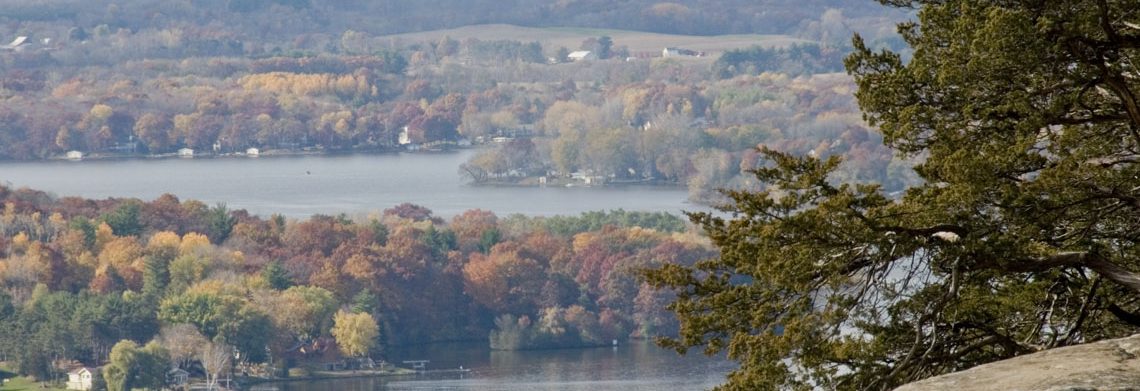
My wife and I purchased a five acre degraded woodland property in the east range of the Baraboo Hills in January 2020. At the time, it was one solid thicket of buckthorn, honeysuckle and prickle ash making nearly impossible to walk through the property. A former pasture, sold for development in 1970, the next fifty years saw it change over to hardwood tree species dominated by green ash, black cherry, smooth bark hickory, shagbark hickory and poplar. There are small numbers of hackberry, white mulberry, red oak, paper birch were also growing. The last mature butternut tree had died and blown down either in 2018 or 2019. Two butternut seedlings struggled on near the house but were already infected with butternut canker and succumbed shortly after will moved in.
A half dozen white oak trees survived from pre-settlement times. These open grown specimens made it through more than a century of cows and neglect only because they were used to anchor the barbed wire and woven wire fence used as pasture boundary. One monster white oak wind throw serves as a nurse log. It measures more than 36″ diameter at breast height (five feet from its base). The log is about 20 feet long and covered in moss.
Emerald ash borer began to appear in the crowns of the Squirrel Farm ash trees about the time we first visited the property in the fall of 2019. By the summer of 2020 a third or more were showing bark blonding and crowns showed prominent thinning. By 2021 all ash trees were showing symptoms and a quarter of trees were fully dead. We harvested hazard trees nearest the house and had them sawn for lumber. By 2022 half of the ash trees were fully dead with remaining trees on their way out. The loss of the ash component, representing approximately 35% of the canopy was gone. This substantially reduced the number of live trees that needed to be thinned.
Winding Up Initial Work
We planted more than a dozen burn pile scars with collected grass seed last fall. We will conduct our second prescribed burn in the next week. I will plant remaining grass seed, with collected forbs after the burn. Roads provide solid burn breaks on two sides. The driveway and house site form a break on the south. Finally, a ten foot mowed and blown break protects the property line along the eastern edge.
The burn this week promises to be much more exciting. There is still plenty of surface fuel available to burn this spring. Add to that the large number of ash logs, seedlings, and remaining slash on the ground and there should be enough fuel for a low to moderate activity woodland fire. A large number of standing snags offer the possibility for some really interesting fire behavior. I have been raking around trees and will continue to rake and blow out around them ahead of the burn. Since nobody is perfect, I will likely miss a few and therein lies the opportunity for some excitement.
The Next Phase
Our NRCS agent was delighted with the work and recommended we apply for the Conservation Stewardship Program. The paperwork is done and my application will be rated this week. This program recognizes people that have made a substantial effort to improve habitat on their property. It rewards them for maintaining that progress, while taking things to the next level. This year that means continuing with the garlic mustard and woody invasive control, as well as adding to the oak inventory on the property.
Check back for a round-up after we put fire on the ground. We just got a load of rain, but the breaks are ready, burn plan is complete and drip torches are full.